
 Free shipping
 +31 638047308
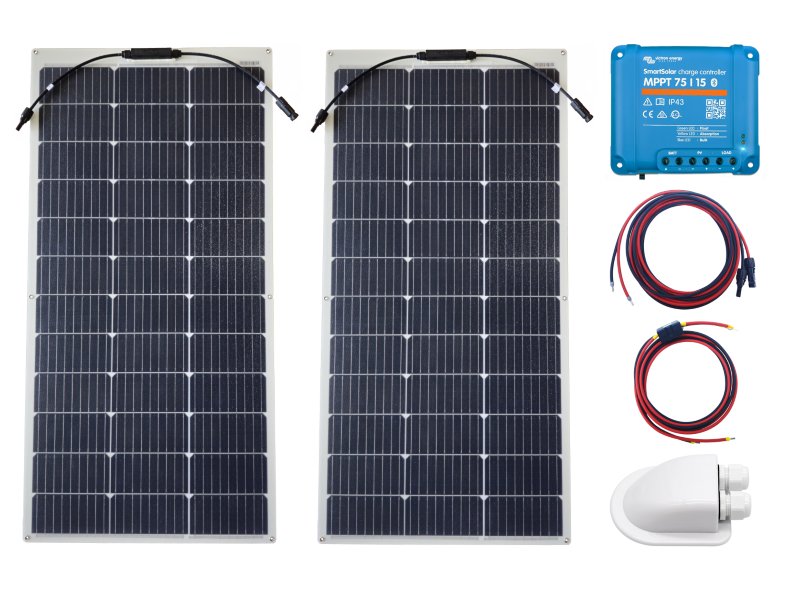
When travelling with a camper / caravan or sailing with a boat, you do not want to run out of power. Solar panels are an ideal way to charge a battery, as you do not need to start the engine or find a power outlet. Charging happens automatically — but how do you choose the right solar panel kit? Read more below!
The most important question:
Save time and research? Call us or send all your questions via chat for free personalised advice!
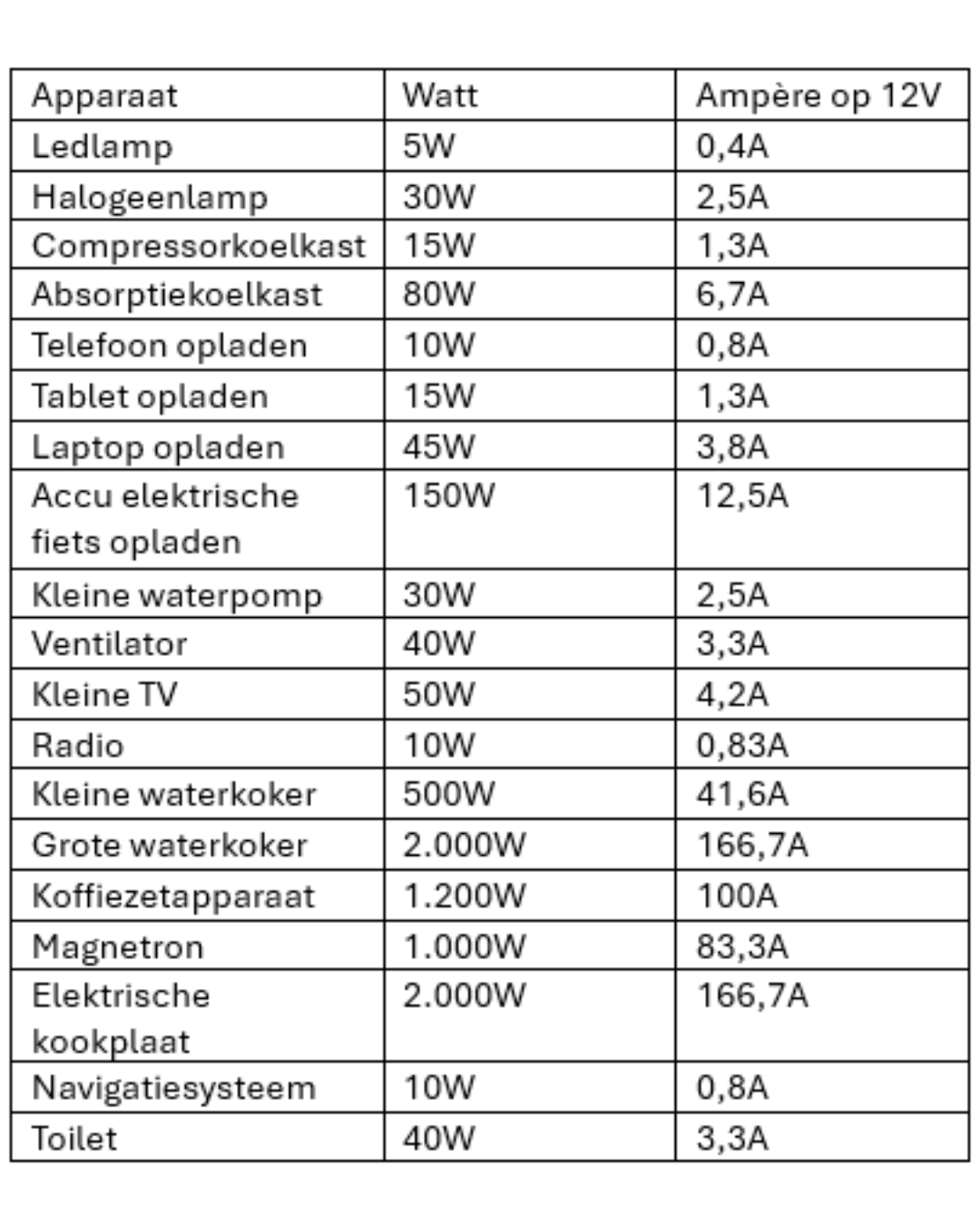
The first step is to check which devices are connected to the battery. Then you need to find out how much power these devices consume. This information can usually be found on a label on the device, in the manual, or on the website where it was purchased. Next, determine how long each device runs per day. You can then make a calculation — example:
Cool box runs … hours per day × fridge consumes … watts per hour = … watts per day
Lamp is on … hours per day × lamp consumes … watts per hour = … watts per day
Then you add everything together — the watts per day of the cool box and the watts per day of the lamp. The result is your total daily power consumption in watts.
The next question is: where are you travelling with your caravan, camper or boat? In some areas there are more hours of sunshine. Note that even on cloudy days, the battery is charged by our solar panels — however, they are of course more efficient in sunny conditions.
At the bottom of this blog, you can see how much our panels generate on cloudy and sunny days — see the conclusion.
Should I choose a PWM or an MPPT charge controller, and what are the options for each type?
There are many different types of charge controllers with various options. When it comes to charge controllers, a distinction is made between PWM and MPPT charge controllers.
This is a difference in technology: MPPT charge controllers are more efficient than PWM charge controllers. Especially in cloudy regions, MPPT controllers perform better than PWM controllers. The MPPT controllers we offer have a maximum efficiency of 98%, while our PWM controllers have a maximum efficiency of 85%. Take this into account in your calculation or contact one of our team members!
An MPPT charge controller is more efficient but also more expensive — and it is not always necessary to choose one. The difference between MPPT and PWM becomes greater as the system size increases. Sometimes a kit with one panel and an MPPT controller is a smart choice, especially if you have limited space for solar panels. We are happy to help you make the right decision.
Options per charge controller:
Victron Energy SmartSolar MPPT charge controllers:
Comes with a Bluetooth function that allows you to see how much power the solar panels generate. You can adjust settings and check how full the battery is. This charge controller does not have a display, as all information is visible through the Bluetooth app.
.
This charge controller also has a display where you can see how full the battery is and how much power the solar panels generate. You can also change settings here. It is a PWM charge controller — cheaper but less efficient than MPPT controllers. This controller has two USB ports.
.
Roof/deck space and expandable solar panel kits:
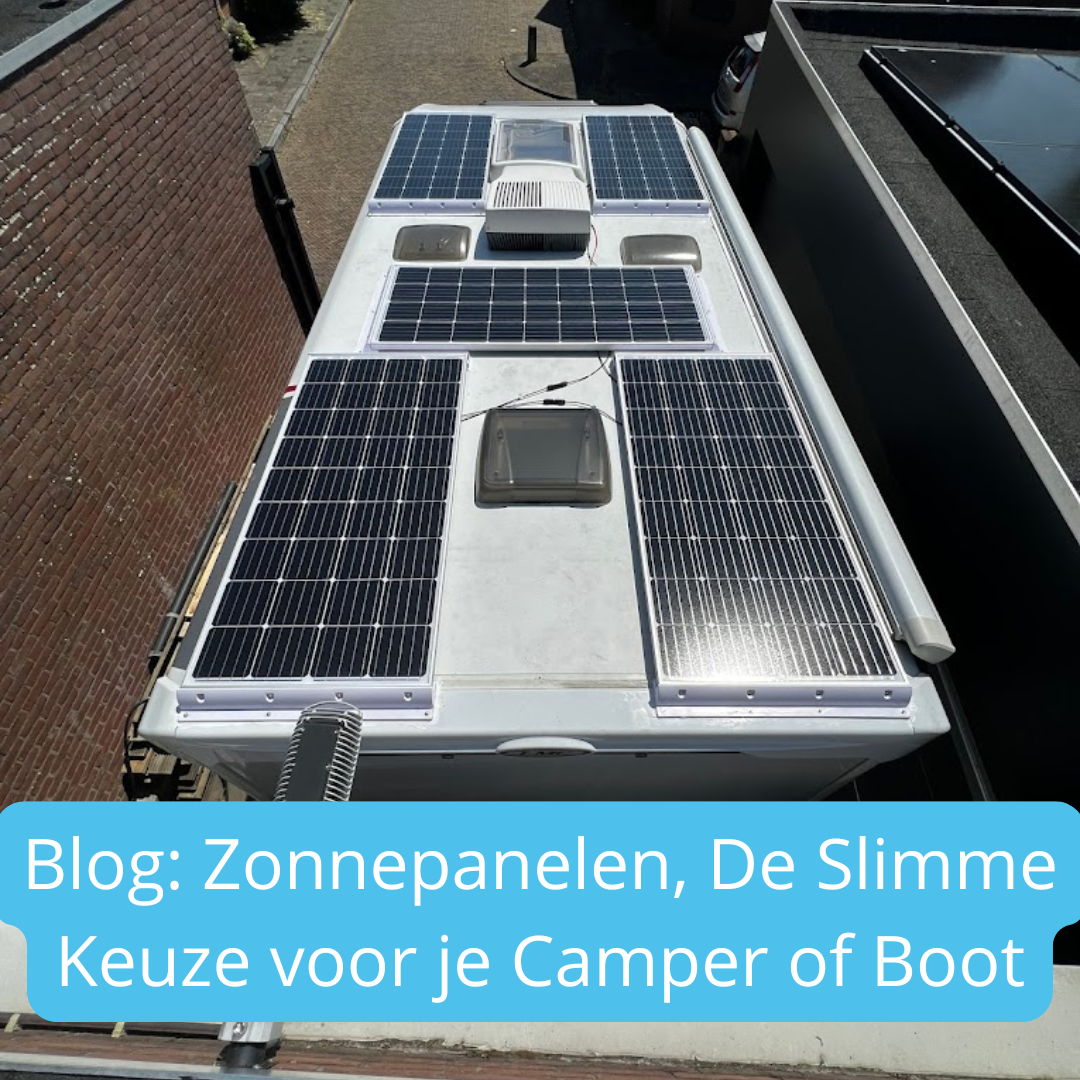
Sometimes, after doing a calculation, it can be difficult to choose the right kit. That is why some of our solar panel kits are expandable. You do not need to buy a more expensive kit right away — if the system produces too little power, you can expand it later. This is also useful if you plan to add an extra cool box, for example. Not all kits are expandable — please contact us for personal advice!
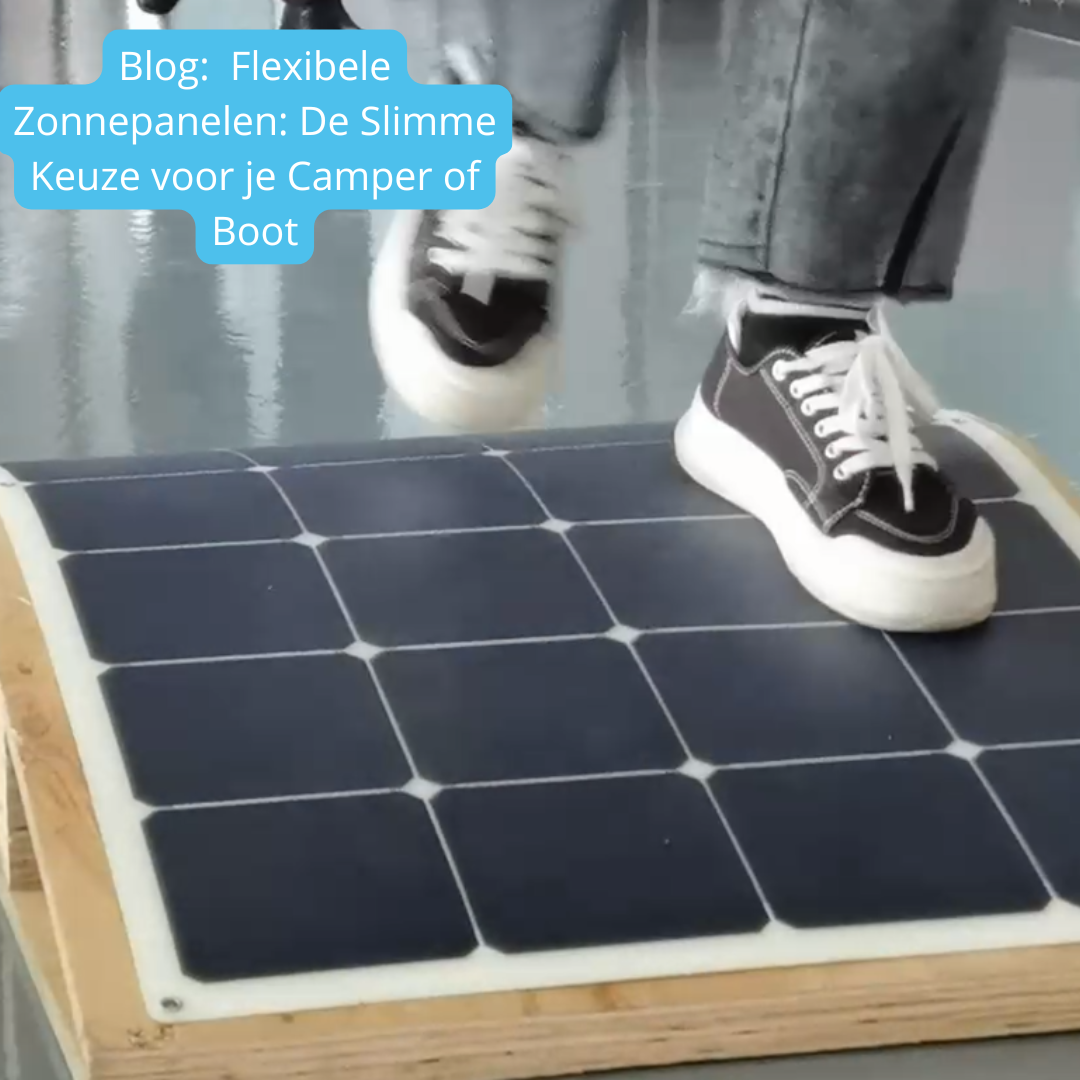
It is also important to consider the available space on your roof/deck. Our flexible solar panels have the following dimensions: See product page.
Conclusion: How many solar panels do I need?
How much does the solar panel generate?
But how much does a solar panel actually generate? This depends on several factors. For example, the orientation of the panel, the solar radiation per m² and the temperature.
On a sunny day, the panel generates an average of between 85 and 100 watts per hour.
On a cloudy day, the panel generates an average of between 15 and 30 watts per hour.
- Check how much you consume per day.
- Calculate how many solar panels you need and whether you need an MPPT or PWM charge controller. Also consider the available space on your roof/deck.
- Stuck? We are happy to help!